Autistic meltdowns are no joke. I have had three the past week, one of which was the final straw which landed me in hospital.
The word “meltdown” comes from the catastrophic, dangerous release of radioactive material in a nuclear power plant. Meltdowns are acute events where an autistic person becomes completely overwhelmed and often loses control of their behaviour. They may scream, kick, punch, break things, lash out verbally, or cry. They can also “implode”, collapsing violently inwards with little outward signs of distress. When I implode I want to cry and scream but I can’t… it’s all stuck inside, tearing at my insides. In my experience, these are the worst kind of meltdowns as no body can see that something is wrong and you get no help. Another way an autistic person may respond during a meltdown is running away from the situation causing the meltdown, withdrawing from people and becoming non-verbal. My latest meltdown happened in the supermarket last night. I usually wear my industrial earmuffs when I’m out in public, but thought I’d be ok this time as I was only picking up a few things and would be out in five minutes. But alas a staff member dropped a whole lot of metal stuff right next to me. The whole supermarket heard it clang to the ground and it even ruffled other shoppers. The noise was excruciatingly loud, like something from a construction site. I immediately left the store. I didn’t say anything to the check out lady. I completely ignored the bloody charity guy who was waiting like a spider at the entrance hoping to catch me and get a donation out of me. I find that when I am in a meltdown it is difficult to mask. I have nothing left in me. When I got back to the car, I finally blew up. My dad was asking me all these questions. Had I found what I was after in the supermarket? Why wasn’t it there, was it on sale? I screamed at him to shut up. We had to go straight home.
Meltdowns often build like a tsunami. Sometimes there are signs that one is developing, like the way the water recedes from the shore. This is called the “rumbling stage”. This can look like verbal pleas to “go now”, stimming such as rocking or pacing, stress, a deterioration of functioning, depression and lack of sleep. For me, I have a lot of trouble sleeping at night and need to rest in bed during the day. But the neighbour’s grandkids have started coming over every weekend and playing basketball. The constant banging of the basketball and thumping when it hits the backboard triggered a meltdown in me. I wanted to cry and scream. I was going to meet my mum that afternoon but I ended up collapsing and couldn’t get to the phone. If anyone found me like this I would have barely been able to talk. When meltdowns are particularly severe they can morph into shut downs where we cannot talk, are unresponsive, may not be able to hear or see clearly, feel out of our body or that the world is dream like, our limbs go limp, we can’t move, and we may even faint. During one meltdown I could not get off the ground and this was in the middle of a public area.
Some common triggers for autistic meltdowns are: sensory overwhelm (for me this is usually noise), too much social contact, changes in routine, change in general, and stress. I was particularly vulnerable to the meltdown I had last night as I had just been discharged from hospital. I had settled in and felt safe, contained and looked after there. It was like being planted and then uprooted again.
In kids, autistic meltdowns can look like tantrums, but there is a big difference. Meltdowns and tantrums generally occur for different reasons. A child throws a tantrum because they’re not getting their own way, but an autistic meltdown is something beyond a person’s control and is a response to an extremely distressing situation. Autistic meltdowns are bigger, more emotional and last for longer. It can take days to recover from a meltdown. It can be extremely damaging to treat an autistic person like they are having a tantrum. When I was fifteen I went to a friend’s party. She turned the music up and started dancing. I started getting more and more overwhelmed by the social and auditory stimuli. I tried turning the music down, but she kept turning it up. I was about to break down crying and didn’t want them to see me like this. I ended up bolting to the nearest exit and going outside, gasping for solitude and silence like an asthmatic gasping for air. I didn’t know anything about autism at the time, and neither did my friends. The girl was angry at me, accusing me of “walking out” of her party because I wasn’t getting my way. I felt completely alone and no one understood what was happening. I only got my autism diagnosis during my 20s. I wish I had of known earlier.
I will finish with a few tips for helping an autistic person having a meltdown:
- Ask the person what it is they need. It’s even better to have this conversation before a meltdown happens, as the person may not be able to communicate clearly during a meltdown. For some people touch is reassuring, but for others it can worsen a meltdown
- Talking can be incredibly difficult during a meltdown. Do not keep asking the person questions or getting them to respond. Do not get angry when they are not answering you
- Try not to react to our anger and get angry in return. We are overwhelmed and distressed
- Give us space to rest, recuperate and recover without placing additional demands on us. The thing that helped the most last night was when my dad left me at home alone while he went back to pick up the pizza we’d ordered. Having a quiet house to myself was the best medicine. I also made ginkgo and chamomile tea which I believe helps the nerves recover after exposure to loud noise
- Reduce sensory overload. Cover the person with a blanket, give them earmuffs, and provide a quiet, dark space. Remove the trigger (e.g. noise)
- Prevent the meltdown from happening in the first place. Pick up on “the rumble stage” and avoid triggering situations during this time. I will never go to the shops again without my earmuffs and especially during “the rumble stage”. Be extra kind to yourself/your autistic friend/family member etc. during this time
- Reduce anxiety about uncertain situations by providing information about what to expect in advance. For example my mum showed me the route to the osteopath clinic I had an appointment at and we planned where I would park before my appointment
- I am not an advocate for drugs, but some meds such as valium, olanzapine wafers, and sleeping pills can be helpful when recovering from a meltdown
- Putting on background music or white noise helps some people as it masks the distressing noise. I also found a similar thing with smell. I bought a desk which has a perfume scent to it, but keeping a bar of lavender soap next to my bed or turning on my essential oil diffuser masks the scent
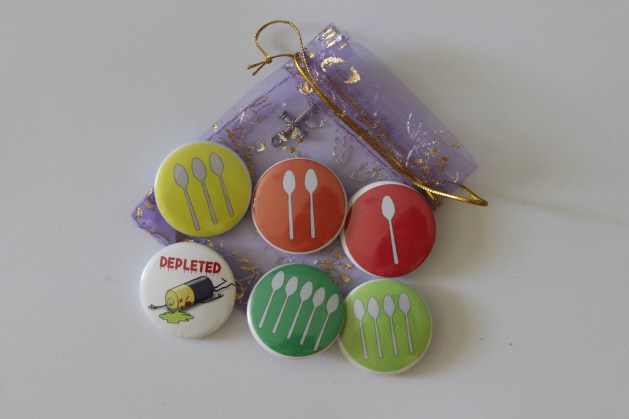
- I have made a set of badges which autistic people can use to communicate where they’re at/how much energy or “spoons” they have left to tackle daily tasks. They are a good way to communicate when we are in meltdown mode. I sell these so please contact me if you would like to purchase a set
 hsphaven
Leave a comment